5 min read
UAV Flight Controller: Sensors, Loops, and Outputs
Understand how UAV flight controllers use sensors and control loops to manage aircraft, from stabilization to command execution.
By the Rox Aero team
UAV Flight Controller Functionality
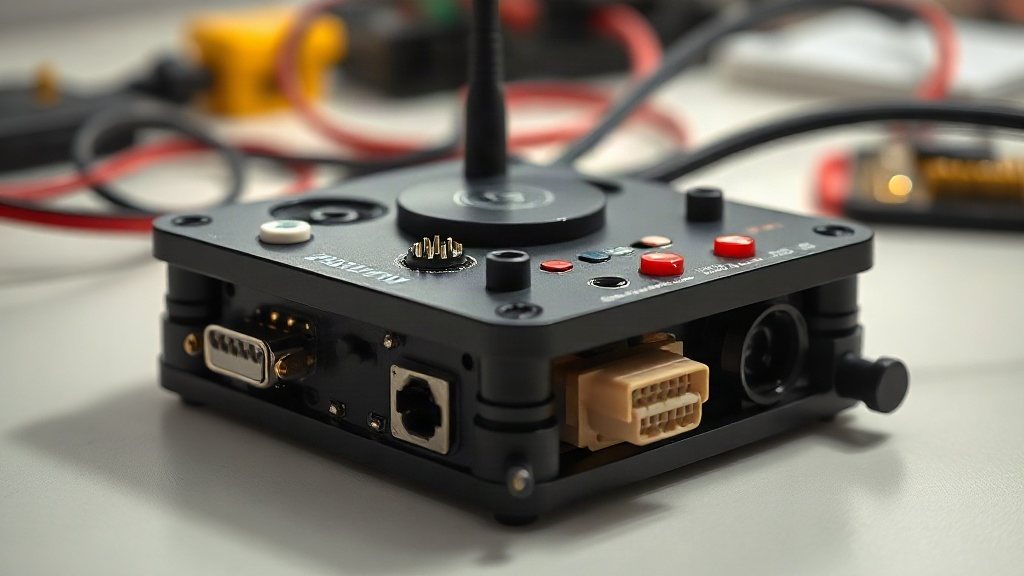
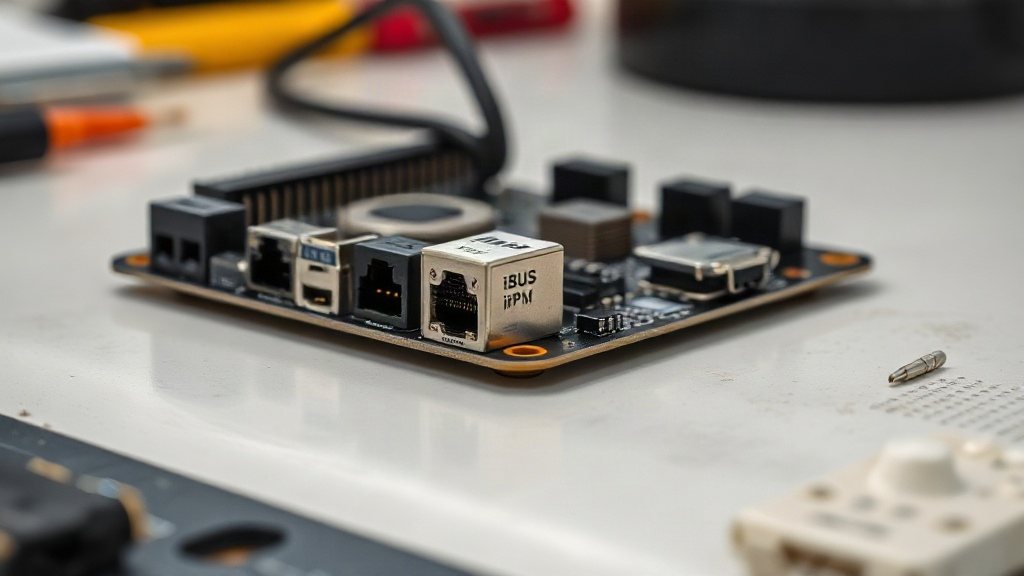
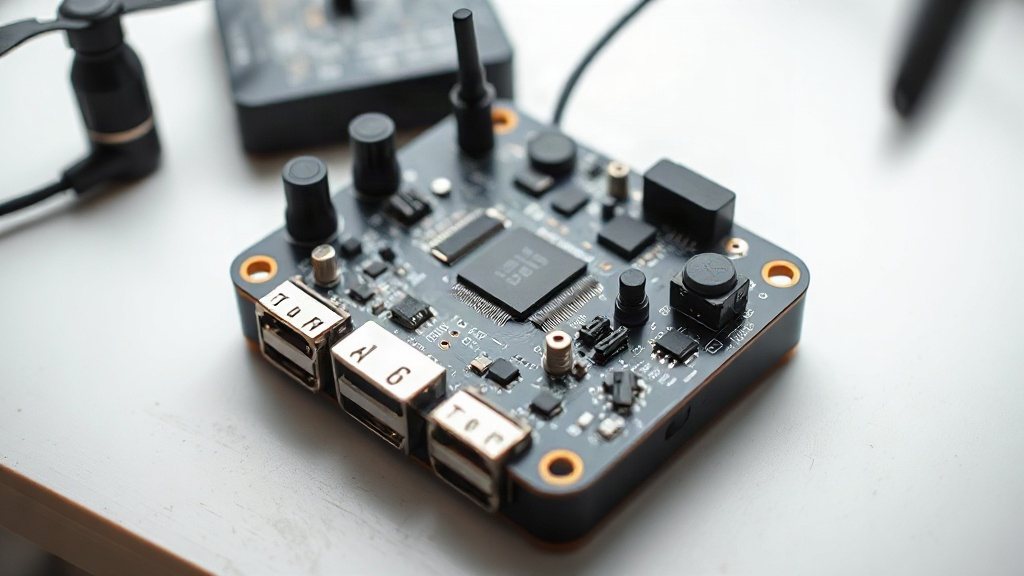
A UAV flight controller is the central processing unit responsible for the aircraft's stability, navigation, and mission execution. It takes inputs from various sensors, processes them through complex algorithms and control loops, and generates outputs to actuators like motors and control surfaces. Understanding how flight controllers work is crucial for selecting the right system for your UAV platform. The core function involves maintaining desired attitude and position, responding to pilot commands or autonomous waypoints, and managing the overall flight envelope. This allows for stable flight in various conditions and enables sophisticated mission profiles. For example, the FC-1 Flight Controller integrates essential components like a 6-axis IMU and multiple output channels into a single unit, simplifying integration for multirotor and fixed-wing UAVs.
Sensor Inputs for Flight Control
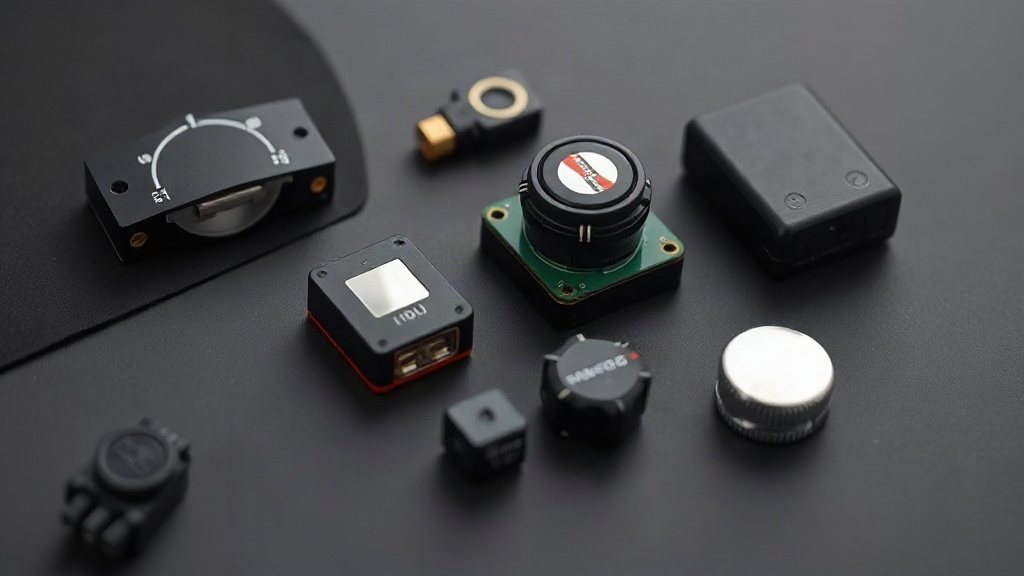
The flight controller relies on a suite of sensors to understand its state relative to the environment. The most critical is the Inertial Measurement Unit (IMU), typically combining accelerometers and gyroscopes. Accelerometers measure linear acceleration, which, when integrated over time, can estimate changes in velocity and position. Gyroscopes measure angular velocity, allowing the flight controller to detect and react to rotations around the pitch, roll, and yaw axes. This data is vital for maintaining stability. GPS receivers provide global position information, essential for navigation and waypoint following. Barometers measure atmospheric pressure to estimate altitude, while magnetometers can provide heading information, though they are susceptible to magnetic interference. Other sensors can include airspeed sensors, optical flow sensors for low-altitude positioning, and lidar for altitude hold and obstacle avoidance. The quality and fusion of data from these sensors directly impact the performance and reliability of the UAV flight controller.
Control Loops and Stabilization
The heart of a UAV flight controller's operation lies in its control loops. These are algorithms that continuously compare the desired state (e.g., a specific attitude or position) with the current state derived from sensor data. The difference, known as the error, is then used to calculate corrective commands for the actuators. A common example is the PID (Proportional-Integral-Derivative) controller. The proportional term reacts to the current error, the integral term addresses past errors to eliminate steady-state deviations, and the derivative term anticipates future errors based on the rate of change. These loops are tuned for each specific airframe and its flight characteristics. For instance, a multirotor requires fast, responsive loops to counteract disturbances and maintain hover, while a fixed-wing aircraft might prioritize smoother, more stable control for efficient cruise flight. The Embedded Firmware & Control capability at Rox Aero focuses on developing the real-time firmware that manages these complex sensor fusion and stabilization loops.
Actuator Outputs and Command Execution
Once the control loops have determined the necessary adjustments, the flight controller sends commands to the aircraft's actuators. For multirotor UAVs, this primarily means controlling the speed of individual electric motors via Electronic Speed Controllers (ESCs). By precisely varying motor speeds, the flight controller can control the aircraft's pitch, roll, yaw, and altitude. For fixed-wing aircraft, outputs are directed to servos that move control surfaces like ailerons, elevators, and rudders, as well as to the throttle control for engine or motor speed. The FC-1 Flight Controller, for example, offers four ESC channels and ten servo outputs, providing versatile connectivity for a wide range of UAV designs. These outputs are generated based on the flight controller's internal state estimation and the execution of navigation commands or pilot inputs. The Flight Control Electronics capability at Rox Aero encompasses the design and manufacturing of such robust hardware, ensuring reliable signal delivery to all critical components.
Autonomy and Mission Planning
Beyond basic stabilization, modern UAV flight controllers enable autonomous operation. This involves processing mission plans, which can be a series of waypoints, specific maneuvers, or complex task sequences. The flight controller interprets these commands, integrates them with real-time sensor data, and directs the aircraft to follow the planned path. This requires sophisticated navigation algorithms and the ability to adapt to changing conditions. For example, if a waypoint is missed due to wind, the flight controller must recalculate a trajectory to reach the next objective. Ground control station software, like RoxAero GCS, is used to upload these mission plans and monitor the aircraft's progress. For manufacturers looking to integrate advanced autonomous capabilities, understanding the interplay between the flight controller's processing power and the airframe's aerodynamic characteristics is key. Rox Aero's expertise in Aerodynamic Simulation can support this by providing insights into airframe behavior under various flight conditions, which informs flight controller tuning and mission planning.
Integration with Airframe and Payload
A UAV flight controller does not operate in isolation. Its performance is intrinsically linked to the airframe's design, stability, and the payload it carries. The physical characteristics of the airframe influence how the flight controller’s commands translate into aircraft motion. A heavier payload can affect inertia and response times, requiring recalibration or adjustments to control loop gains. The flight controller must be robust enough to handle the expected operating conditions and any potential disturbances. For wholesale and OEM supply, Rox Aero provides both the flight control hardware and structural components. Our capabilities extend to manufacturing high-quality Carbon Fiber Aerospace Components designed to precise specifications, ensuring a lightweight yet strong airframe that complements the advanced avionics. This holistic approach to UAV system design ensures optimal performance and reliability.
Planning a batch? Request a wholesale quotation from Rox Aero with your drawings and quantities, and an engineer will reply with pricing and lead time.
Frequently asked questions
What sensors does a UAV flight controller use?
UAV flight controllers primarily use Inertial Measurement Units (IMUs) comprising accelerometers and gyroscopes. They also commonly integrate GPS for navigation, barometers for altitude estimation, and sometimes magnetometers for heading.
How does a flight controller stabilize a drone?
Flight controllers use control loops, often PID controllers, to compare sensor data (like attitude from gyros) with desired states. They then send commands to motors or servos to correct any deviations, ensuring stable flight.
What is the difference between ESC channels and servo outputs on a flight controller?
ESC channels control the speed of electric motors for propulsion, common in multirotors. Servo outputs control the position of servos, used for actuating control surfaces on fixed-wing aircraft or operating other mechanisms.